
Increasing synchronicity of global extreme fire weather
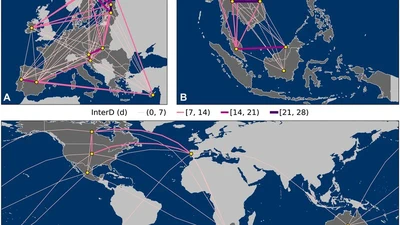
Concurrent extreme fire weather creates favorable conditions for widespread large fires, which can complicate the coordination of fire suppression resources and degrade regional …

I am an early-career climate scientist pushing the boundaries of understanding wildfires and climate extremes using hydroclimatic, data-driven, and geostatistical approaches. My work has led to step-changes in understanding the synchronicity and persistence of extreme fire weather, factors that strongly influence extreme fires.
I work with Prof. John Abatzoglou, who leads the Climatology Lab at University of California, Merced.
PhD, Geographic Information System
2018-09-01
2024-06-30
University of Chinese Academy of Sciences
Visiting PhD, Climate Dynamics
2023-04-01
2024-07-31
Columbia University
BSc, Land Resources Management
2014-09-01
2018-06-30
Chang’an University
Benefiting from world-class supervision and collaboration, I focus my recent work on extreme fires, one of the most societally and environmentally destructive consequences of climate change.
I increasingly concentrate on predicting extreme fires and developing a mechanistic understanding of their causes, contributing to advances in fire science and fire management, with the potential to save lives and property. Please reach out to collaborate!
Concurrent extreme fire weather creates favorable conditions for widespread large fires, which can complicate the coordination of fire suppression resources and degrade regional …
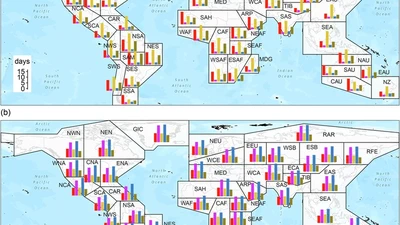
Compound events (CEs) are attracting increased attention due to their significant societal and ecological impacts. However, their inherent complexity can pose challenges for …
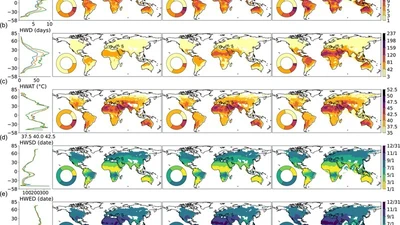
Heat waves are continuous high temperature processes, which are defined as the daily maximum temperature exceeding the absolute-relative combined high temperature thresholds for …
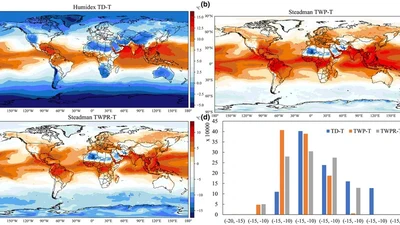
Temperature is the most concerned factor in the human–environment interactions. Apparent temperature accounting for other meteorological variables, such as humidity, wind speed and …
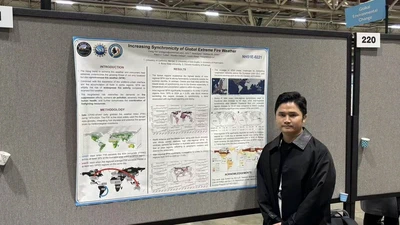
Concurrent extreme fire weather creates favorable conditions for widespread large fires, which can complicate the coordination of fire suppression resources and degrade regional …

Fire weather waves (FWWs), defined as persistent extreme fire weather, can elevate extreme fire danger by sustaining favorable burning conditions over multiple consecutive days. …
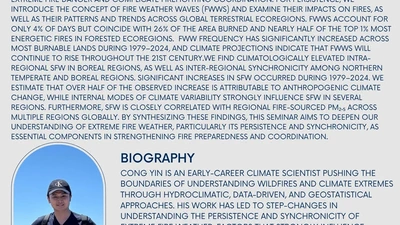
Extreme fire weather, characterized by exceptionally dry, warm, and often windy conditions, increases fire danger by enhancing fuel dryness and promoting fire spread. This seminar …
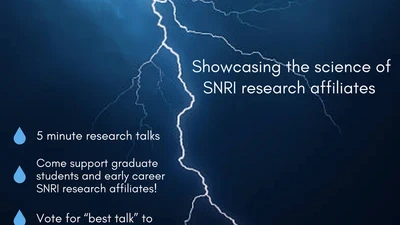
Concurrent extreme fire weather creates favorable conditions for widespread large fires, which can complicate the coordination of fire suppression resources and degrade regional …
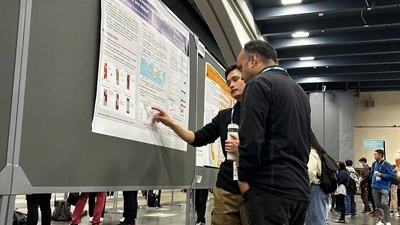
Compound events (CEs) are attracting increased attention due to their significant societal and ecological impacts. However, their inherent complexity can pose challenges for …
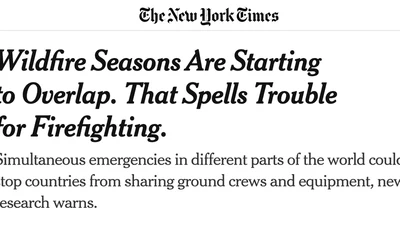
Our new study on synchronous fire weather in Science Advances received media coverage from several outlets.

On August 1, 2025, my very first personal academic homepage, XScience, is finally live!

On February 22, 2025, I launched a WeChat public account called Extreme Science!