At 2025 SNRI Early Career Researcher Lightning Talks: Increasing synchronicity of global extreme fire weather
Mar 11, 2025· ,·
0 min read
,·
0 min read
Cong Yin
John Abatzoglou
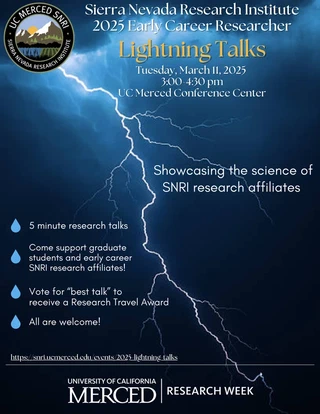 Talk Poster
Abstract
Concurrent extreme fire weather creates favorable conditions for widespread large fires, which can complicate the coordination of fire suppression resources and degrade regional air quality. Here, we examine the patterns and trends of intra- and inter-regional synchronous fire weather (SFW) and explore their links to climate variability and air quality impacts. We find climatologically elevated intra-regional SFW in boreal regions, as well as inter-regional synchronicity among northern temperate and boreal regions. Significant increases in SFW occurred during 1979–2024, with more than a twofold increase observed in most regions. We estimate that over half of the observed increase is attributable to anthropogenic climate change. Internal modes of climate variability strongly influence SFW in several regions, including Equatorial Asia, which experiences 43 additional intra-regional SFW days during El Niño years. Furthermore, SFW is strongly correlated with regional fire-sourced PM2.5 in multiple regions globally. These findings highlight the growing challenges posed by SFW for firefighting coordination and human health.
Location
UC Merced Conference Center
5200 North Lake Rd., Merced, CA 95343

Authors
Cong Yin
(殷聪)
Postdoc Scientist
I am an early-career climate scientist pushing the boundaries of understanding wildfires and climate extremes using hydroclimatic, data-driven, and geostatistical approaches. My work has led to step-changes in understanding the synchronicity and persistence of extreme fire weather, factors that strongly influence extreme fire activity. My recent research focuses on extreme fires, one of the most societally and environmentally destructive consequences of climate change.
I work with Prof. John Abatzoglou, who leads the Climatology Lab at University of California, Merced.