Fire Weather Waves Fuel Extreme Fire Activity
Dec 18, 2025· ,,,,,·
0 min read
,,,,,·
0 min read
Cong Yin
John Abatzoglou
Piyush Jain
Mojtaba Sadegh
Mike D. Flannigan
Matthew W. Jones
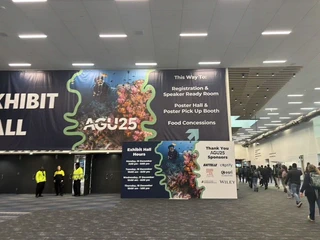 At AGU 2025
Abstract
Fire weather waves (FWWs), defined as persistent extreme fire weather, can elevate extreme fire danger by sustaining favorable burning conditions over multiple consecutive days. Here, we examine the relationship between FWWs and fire activity, as well as the patterns and trends of FWWs across global terrestrial ecoregions. In forest ecoregions during 2002–2023, although FWWs accounted for only 9% of days, 29% of all fires ignited on FWW days, and over half of the top 1% largest fires ignited on FWW days, with hotspots observed in temperate and boreal regions. Fire activity strongly responds to FWWs, facilitated by warmer, drier, and windier conditions. In Mediterranean forests, for example, the daily average burned area during the 1 to 7 days following FWW onset is 2 to 3 times that during the 3 days preceding FWWs. FWWs have become, and are projected to become, more frequent, persistent, and severe, with a twofold increase in FWW days projected for 2076–2100 compared to 1979–2024. These findings highlight the potential of FWWs to enhance extreme fire prediction.
Location
New Orleans Ernest N. Morial Convention Center
900 Convention Center Blvd, New Orleans, LA 70130

Authors
Cong Yin
(殷聪)
Postdoc Scientist
I am an early-career climate scientist pushing the boundaries of understanding wildfires and climate extremes using hydroclimatic, data-driven, and geostatistical approaches. My work has led to step-changes in understanding the synchronicity and persistence of extreme fire weather, factors that strongly influence extreme fires.
I work with Prof. John Abatzoglou, who leads the Climatology Lab at University of California, Merced.
Authors
Authors
Authors
Authors
Authors