Fire Weather Waves Fuel Extreme Fire Activity
2025年12月18日· ,,,,,·
0 分钟阅读时长
,,,,,·
0 分钟阅读时长
殷聪
John Abatzoglou
Piyush Jain
Mojtaba Sadegh
Mike D. Flannigan
Matthew W. Jones
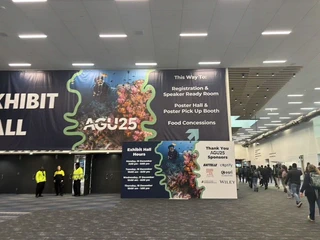 在AGU 2025会场
摘要
Fire weather waves (FWWs), defined as persistent extreme fire weather, can elevate extreme fire danger by sustaining favorable burning conditions over multiple consecutive days. Here, we examine the relationship between FWWs and fire activity, as well as the patterns and trends of FWWs across global terrestrial ecoregions. In forest ecoregions during 2002–2023, although FWWs accounted for only 9% of days, 29% of all fires ignited on FWW days, and over half of the top 1% largest fires ignited on FWW days, with hotspots observed in temperate and boreal regions. Fire activity strongly responds to FWWs, facilitated by warmer, drier, and windier conditions. In Mediterranean forests, for example, the daily average burned area during the 1 to 7 days following FWW onset is 2 to 3 times that during the 3 days preceding FWWs. FWWs have become, and are projected to become, more frequent, persistent, and severe, with a twofold increase in FWW days projected for 2076–2100 compared to 1979–2024. These findings highlight the potential of FWWs to enhance extreme fire prediction.
位置
New Orleans Ernest N. Morial Convention Center
900 Convention Center Blvd, New Orleans, LA 70130

Authors
殷聪
(Cong Yin)
博士后
我专注于气候科学领域,致力于使用水文气候、数据驱动和空间统计方法,增进对野火和极端气候事件的理解。我在揭示极端火灾天气的同步性和持续性方面取得了进展,这些因素对极端火灾具有重要影响。
我目前在加州大学Merced分校做博士后,与John Abatzoglou教授合作,他领导着Climatology Lab。
Authors
Authors
Authors
Authors
Authors